Public Workshops for South Central Waterfront: Sept. 1st & 3rd

Have an idea about incorporating better public spaces into our Lady Bird Lake waterfront? We know you do!

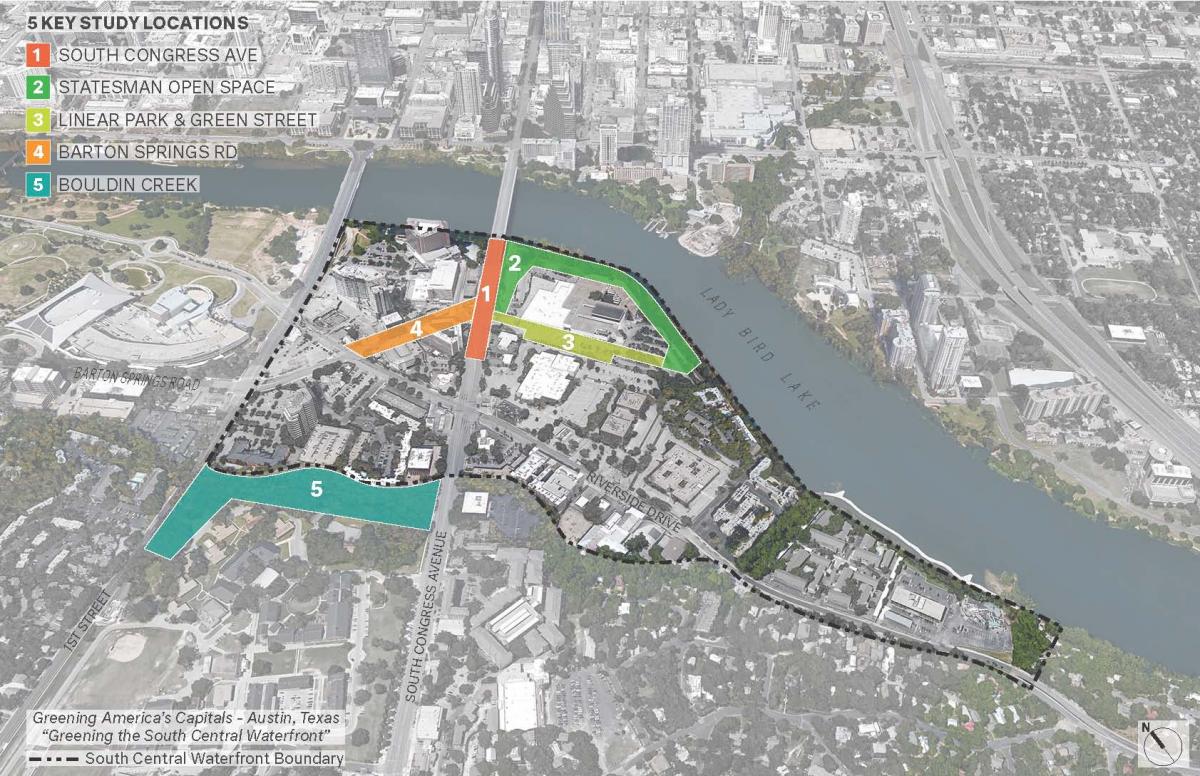
SRCC residents and other Austinites are invited to take part in two Design Workshops to inform designers in planning public space in the South Central Waterfront (SCW) area (map below for reference). Check out the event details below.

UTSCW

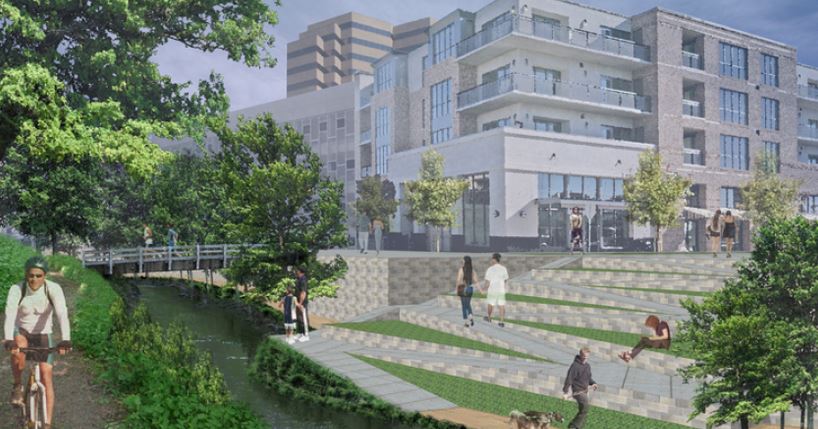
Pictured: UT Architecture concept project.

Both workshops will take place in our backyard at the Texas School for the Deaf at 1102 South Congress. Attendees are asked to access from the main South Congress entrance.

These events are for the whole family – featuring a petting zoo, face painting and ice cream!

Learn more at the City of Austin’s South Central Waterfront Initiative website.

South Central Waterfront

Posted in Communications, Events, Parks and Environment, Planning and Zoning | Comments Off on Public Workshops for South Central Waterfront: Sept. 1st & 3rd

SRCC General Membership Meeting Minutes 8/3/15


meetingMinutesPencil

SRCC GENERAL MEMBERSHIP MEETING
Monday,  August  3, 2015     7:15  PM
GRACE UNITED METHODIST CHURCH
205 E. MONROE, AUSTIN, TEXAS

AGENDA

To be sure you get a vote, become a member. You can join or renew online www.srccatx.org. Not sure if you are current? Email membership@srccatx.org and we’ll let you know.

votes are recorded as “support / oppose / abstain”

CALL TO ORDER/APPROVAL OF MINUTES

Continue reading →

Posted in Agendas and Minutes | Comments Off on SRCC General Membership Meeting Minutes 8/3/15

Austin Neighborhood Council Meeting Summary – 6.24.15

Rodney Gonzalez, the newly appointed Acting Director of the Development Services Department came to speak about changes that are afoot with the Planning and Development Review Department. He spoke generally about management changes at the department but did not get into specifics of how this will affect neighborhood plans etc.

Kathie Tovo came speak on commercial property valuations (and the problem of why they are consistently undervalued). The City of Austin is suing the Travis County appraisal district in District Court about this. There is very little precedent for municipalities pursuing this kind of action. A big issue is that Texas is one of 5 states in the U.S. to not require sales data disclosure for commercial transactions. This is the biggest obstacle that would hopefully be addressed by the City’s actions against the appraisal district.

The Austin Neighborhoods Council Resolution against the MoPac South Expansion passed with a near unanimous vote. (SRCC voted in favor of this).

Scott Gross, a consulting engineer with the transportation department made a presentation called “Paying for Growth”. It outlined how transportation impact fees can be used to fund needed infrastructure improvements. Property taxes do not always keep up with the infrastructure costs needed to support growth. Taxes primarily fund operations and expenses, not capital investment in infrastructure. We currently just use bonds for infrastructure investment. Currently traffic impact analysis focuses on local traffic impacts (like the need to create turn lanes etc.) not systemwide impacts (like more people piling on to existing main arteries). Useful improvements could be to include systemwide impacts in analysis/estimation of fees as well as make them mandatory, not just guidelines. Fort Worth has successfully enacted a transportation impact fee.

State representative Donna Howard came to speak about education from a state legislature perspective. Texas is pay-as-you-go which means that you can only spend money in current revenues. There are also spending limits which restrict funding from comptroller. The legislature did restore some funding to public education after major cutbacks in 2008 but did not restore prior levels of funding to Austin. $175 million from Austin goes to other parts of the state. 31% of school districts (including Austin) aren’t getting the same funding they were getting in 2011. When property tax rates for education are lowered at the local level, the state has traditionally not filled the gap.

Proposed Resolution – PUD Ordinances

 The proposed resolution is against Planned Unit Development (PUD) Ordinances. These ordinances grant larger developments variances so they do not have to comply with certain zoning, environmental and affordable housing restrictions. This resolution would request the City Council, as part of their review of PUD ordinances to:

  • Prevent relaxation of zoning requirements vs. what was in place before PUD projects.
  • Create transparency as to benefits provided to the public (e.g. public areas) vs. entitlements granted to the developer (e.g. height variances)
  • Provide better environmental protections for these denser developments.
Posted in Austin Neighborhood Council, General | Comments Off on Austin Neighborhood Council Meeting Summary – 6.24.15

Austin Neighborhood Council Meeting Summary – 5.27.15

Bill Oakey with Austin Affordability came to speak against the new Travis County Courthouse.   He feels it is too expensive when it is compared to other comparable projects in other parts of the country.  This was a counterpoint to Judge Sarah Eckhardt’s presentation last month citing the reasons why the city needs a courthouse downtown.

Mike Hebert, a business lawyer who has dealt extensively with land development issues gave a summary of the findings of the Zucker report. (The Zucker Report reviewed the Planning and Development Review Department in response to dissatisfaction from both residents/neighborhoods and developers). The Zucker team has done over 150 similar reviews in other cities across North America and sited gross mismanagement issues that are among the worst they have seen. They noted and acute lack of responsiveness to customers in terms of permitting lead times, in-person visits, and phone inquiries. Employees are extremely dissatisfied and cite a lack of clarity in their responsibilities. Staff are frequently unaware of changes to zoning requirements – thus residents are builders only find out about new code when permits are denied. Unlike other planning departments they do not include infrastructure plans in their mapping as part of CodeNext (the Land Use Code Rewrite).

Mayor Steve Adler came to speak and gave a summary of key priorities for the city right now. He urged incrementalism in dealing with findings from the Zucker Report. The City Manager will come back with his response to the findings of the Report on June 30th. The city is filing challenges to property valuations. He believes that commercial properties are severely undervalued in appraisals and is working with City Council to remedy this.

The Mayor noted that the flat homestead exemption was not approved by the state legislature so any increase will have to be on a percentage basis. He views development and growth in Austin as a balance between supply and demand. When we have brought companies to Austin we have also had to import people to fill most of the jobs. He feels we now need to upskill labor not import it (and deal with the ongoing strains on infrastructure). While we do need to contribute to the supply of housing stock, introducing smaller and smaller housing in the core that is more expensive cannot be viewed as a solution to affordability.

Resolutions:

The Clean Affordable Energy Resolution and Resolution Regarding Flood Mitigation resolutions passed (SRCC voted in favor of both).

There is one proposed resolution: Resolution Regarding Mopac South Expansion. The Texas Department of Transportation is considering adding elevated lanes and a flyover at the Mopac South Bridge. There is concern that this will tower over Zilker Park, Austin High and create noise pollution in surrounding areas. Other cities like Boston, San Francisco and Portland are trying to bury lanes and create green space not elevate them.

The resolution:

  1. urges Austin City Council to oppose proposed elevated lanes and flyover on Mopac South Bridge.
  2. supports resolution #20150507-026 urging Capital Area Metropolitan Organization to define the MoPac South expansion project as not exceeding two managed lanes in either direction.
  3. asks City Council to urge the Texas DoT to identify solutions that do not include elevated lanes or a flyover.
Posted in Austin Neighborhood Council, General | Comments Off on Austin Neighborhood Council Meeting Summary – 5.27.15

Waller Creek Conservancy Community Information Session

vision-map-0-2800x1048

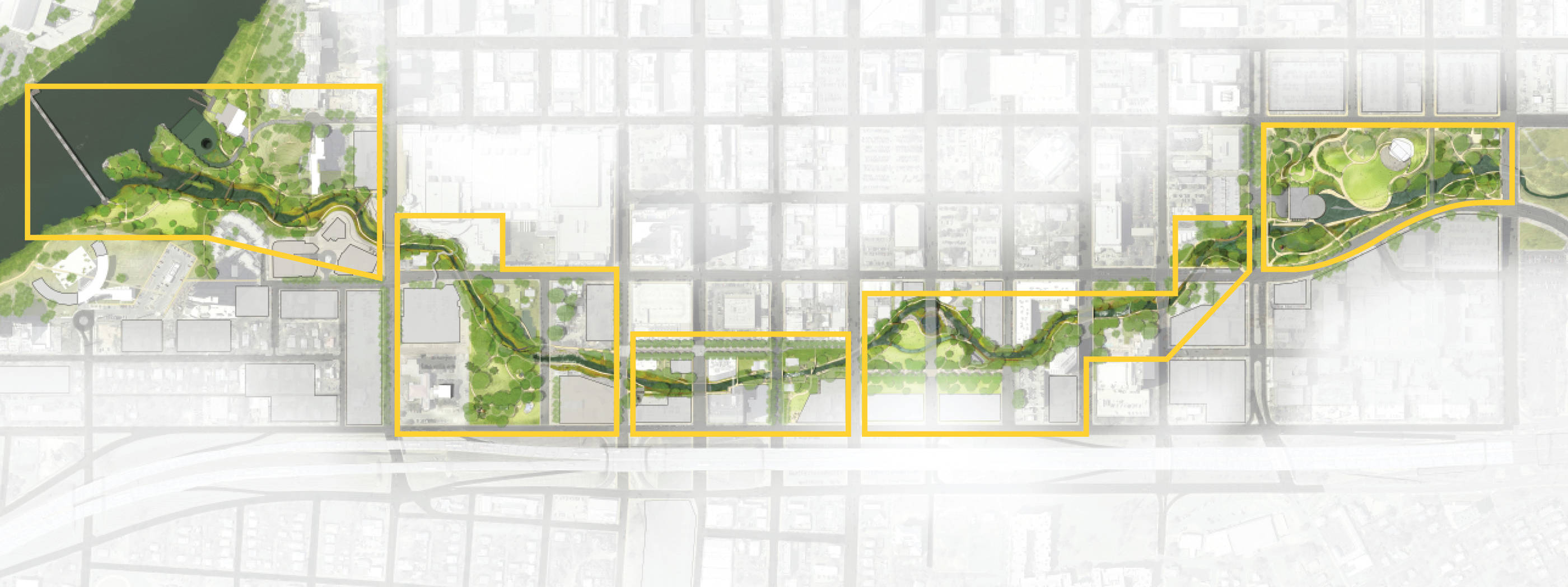
Leveraging philanthropic leadership with local government, the Waller Creek Conservancy (WCC) is a non-profit community partner to the City of Austin. Currently the Conservancy is at work implementing a chain of connected greenspaces that will include a world-class outdoor eventspace; bike and pedestrian trails integrated with Austin’s trail network; interactive playspaces; and a restored native creek ecology.

Running from Waterloo Park at 15th Street to Lady Bird Lake, Waller Creek has the potential to become Austin’s vital green artery. Waller Creek touches many of the things that shape Austin’s identity, including UT, the Texas Capitol grounds, a growing medical complex, our famous music and entertainment district, Austin’s Convention Center, Rainey Street district, Butler Hike and Bike Trail, and Lady Bird Lake. This 1.5 mile area connected with a series of parks and trails through the heart of downtown will end with a pontoon bridge connecting the mouth of Waller Creek to a proposed extension of the south shore Lady Bird Lake boardwalk. WCC will maintain and activate the space in perpetuity as the stewards of Waller Creek.

SRCC has been invited to attend a public information session and provide input:
Waller Creek Public Meeting – South
Aug 6 6pm—8pm
Ann Richards School, Cafeteria


Posted in Events, Mobility, Parks and Environment | Comments Off on Waller Creek Conservancy Community Information Session